


Second greenhouse gas inventory: Enhancing data depth and transparency
Building on our first greenhouse gas inventory, we have further developed our data collection process and included additional sources of emissions. The aim is to increase transparency and gain a more in-depth understanding of our emissions. By incorporating further data sources and ensuring more precise recording, we have been able to improve the quality of our climate data. In the energy sector (Scope 2), adjusted emission factors and more detailed consumption recording enable more accurate analyses. We have also expanded the depth of data in the value chain (Scope 3), including through more precise recording of transport and business travel, as well as the inclusion of additional logistics processes.What is a greenhouse gas balance sheet?
A greenhouse gas (GHG) balance sheet records and evaluates all emissions generated by activities within the company – converted into CO₂ equivalents (CO₂e).
Goals:
- To further improve the data basis and transparency
- To gain a more nuanced understanding of emission sources
- To identify areas for action to reduce emissions
The further development of the greenhouse gas inventory is an ongoing process, particularly due to complex supply chains and varying levels of data availability.
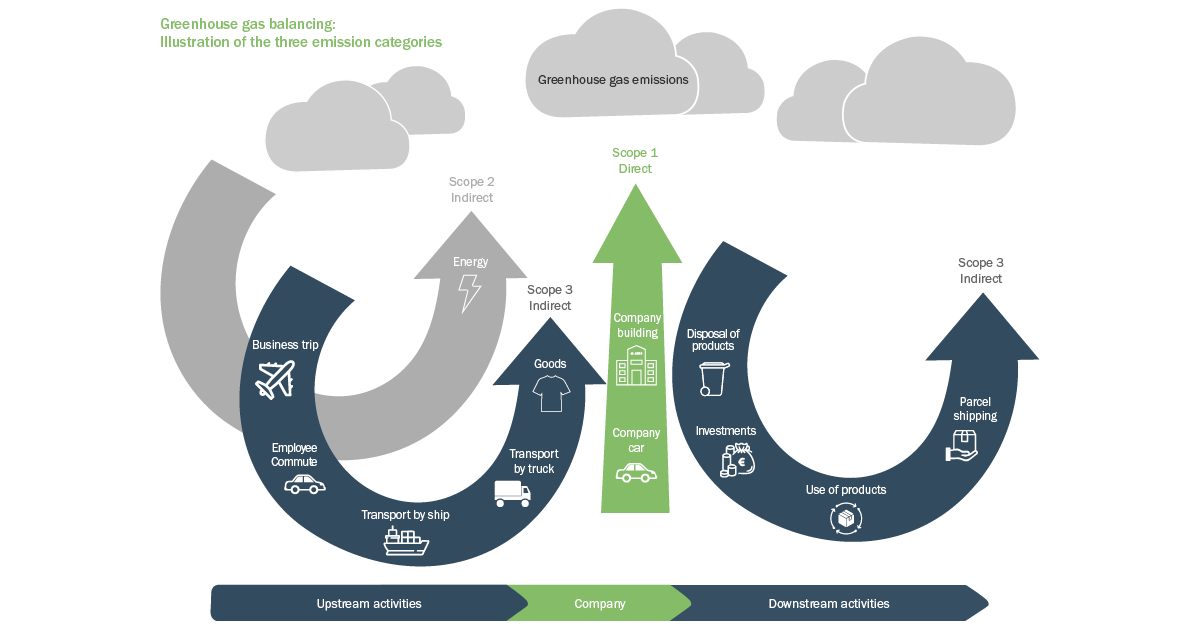
The graphic shows the structure of greenhouse gas emissions according to the three scopes of the Greenhouse Gas Protocol. Scope 1 covers direct emissions, Scope 2 covers indirect emissions from purchased energy, and Scope 3 covers emissions accounted for along the value chain, such as those from transportation, business travel, and materials.
 German
 Dutch
 French